

What Are Signs My Nissan’s A/C Needs a Recharge?
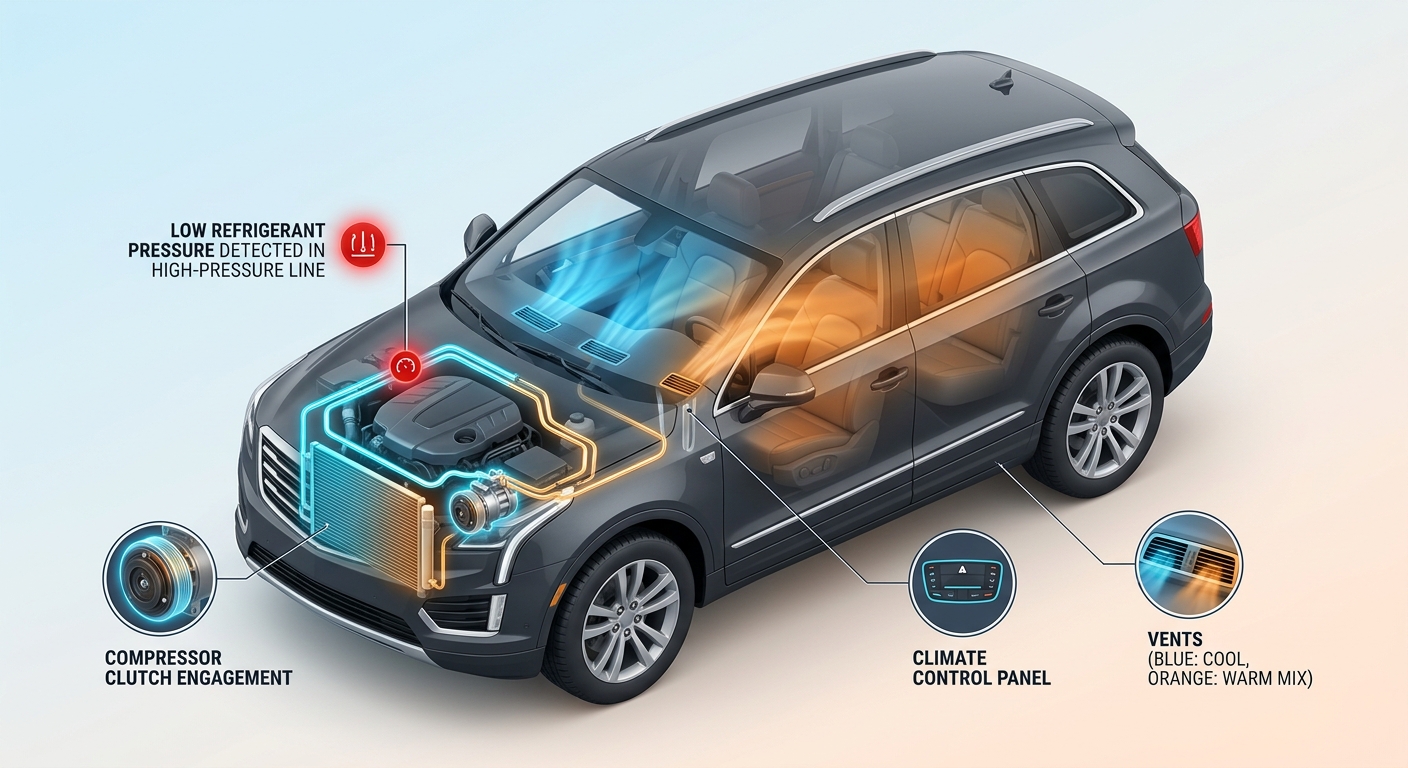
The primary signs that your vehicle’s air conditioning system needs a refrigerant recharge include blowing lukewarm or warm air from the vents, noticeably reduced airflow, extended time required to cool the cabin during hot weather, clicking noises from the compressor clutch under the hood, or unexpected odors caused by evaporator moisture. Here’s what Shelbyville-area shoppers should know about an A/C Recharge.
Automotive air conditioning operates as a sealed, high-pressure loop using specialized refrigerant such as R-134a or R-1234yf to draw heat out of the interior cabin. Over time, rubber seals, Schrader valves, and hose connections experience micro-permeation or natural wear, allowing tiny amounts of refrigerant gas to escape. When system pressure drops below its calibrated threshold, the AC compressor struggles to compress the vapor into liquid, directly diminishing cooling output. If you notice your dashboard vents producing ambient air while idling at a stoplight or taking several miles on the highway to deliver cool air, the system is likely low on charge.
Drivers in Christiana who commute daily along Interstate 24 toward Murfreesboro experience sustained high-speed driving where a fading air conditioner becomes immediately obvious. Ignoring early warning signs can lead to mechanical strain; when refrigerant levels are low, the compressor oil circulating through the loop decreases as well, forcing the clutch to cycle rapidly on and off. Left unserviced, this rapid cycling accelerates wear on internal compressor components.
Along with checking refrigerant levels, inspecting the cabin air filter is a vital step before heading out on long highway drives. A filter clogged with spring pollen, dust, and road debris restricts incoming airflow across the evaporator coil, making even a fully charged climate control system feel weak. To ensure your vehicle is completely prepared for hot weather, you can find our Shelbyville service center location or give our service desk a quick call to schedule a full system pressure test.
Table of Contents
- How Does Nissan Intelligent Climate Control Work with Remote Start and Smartphone Apps?
- Does Using Remote Climate Control Drain Your Nissan Battery in Summer Heat?
- What Battery Types and CCA Ratings Are Used in 2026 Nissan Vehicles?
- How Long Does an OEM Nissan Battery Warranty Last and What Maintenance Is Required?
- Frequently Asked Questions About Nissan Summer Maintenance
- Schedule Your Nissan Summer Maintenance at Newton Nissan South
How Does Nissan Intelligent Climate Control Work with Remote Start and Smartphone Apps?
Nissan Intelligent Climate Control automatically restores your pre-set interior temperature by managing fan intensity, air distribution, and seat conditioning through the vehicle’s remote start system or smartphone application before you step inside.
When engaged via the factory key fob or through remote commands on the NissanConnect Services app, the system checks ambient outdoor temperatures to choose the ideal thermal strategy. In severe heat, the system directs maximum cold airflow through the upper dashboard vents and initiates air recirculation to pull heat out of the interior efficiently. Depending on trim equipment, models equipped with climate-controlled seating automatically activate ventilated seat cooling alongside main cabin conditioning to chill leather surfaces before entry.
The default operational duration for the remote engine start sequence is 10 minutes. If you require additional preparation time, a second remote command extends engine operation for an additional 10-minute cycle, offering a total maximum pre-conditioning window of 20 minutes. This technology is engineered to protect vehicle efficiency; if the driver does not insert the key or press the push-button ignition within the allocated timeframe, the engine and climate systems shut down automatically to conserve fuel and energy.
Spacious crossovers like the mid-size 2026 Nissan Murano demonstrate how these comfort features enhance family travel. Featuring a responsive 2L engine paired with an advanced Xtronic transmission and available All-wheel drive, the Murano pairs luxury climate features with about 33 cubic feet of rear cargo space for road trip luggage. If you are considering upgrading your primary family vehicle before summer vacations begin, you can explore the 2026 Nissan Armada for three-row seating capabilities or choose to sell your current vehicle to our team to apply its market value toward a new model.
Does Using Remote Climate Control Drain Your Nissan Battery in Summer Heat?
Running remote climate control does not drain your 12V battery because remote start ignites the combustion engine or energizes the high-voltage EV battery, actively engaging the alternator to supply power and charge the battery during operation.
A common concern among vehicle owners is whether pre-cooling a heat-soaked cabin places unnecessary stress on electrical components. Because the air conditioning compressor operates via a belt driven by the running engine or through high-voltage electrical architecture, the auxiliary 12V battery is not operating in isolation. Instead, the engine’s alternator generates surplus voltage, replenishing electrical reserves while simultaneously powering interior blower fans and electronic control modules.
However, extreme summer heat itself presents a major physical challenge to battery longevity. While cold weather slows chemical reactions, high ambient temperatures accelerate internal plate corrosion and speed up electrolyte fluid evaporation inside standard lead-acid batteries. The combined stress of radiant road heat and heavy cabin cooling demands makes heat the single leading cause of premature battery failure in southern climates.
For residents in Royal navigating hilly rural roads and open farmland routes during peak afternoon sun, having a fully healthy battery is critical for reliable remote start function. Vehicles utilized in tough operating environments benefit from proactive summer battery health checks. If you drive a work-ready truck, you can read details on the 2026 Nissan Frontier to evaluate its mid-size towing performance, or speak with our finance department to explore our flexible credit financing options for maintenance or vehicle upgrades.
What Battery Types and CCA Ratings Are Used in 2026 Nissan Vehicles?
Modern 2026 Nissan vehicles rely primarily on Enhanced Flooded Battery (EFB) or Absorbent Glass Mat (AGM) units rated between 550 to 700 CCA to power complex onboard electronics and automatic stop-start systems.
| Battery Technology Type | Design Construction | Key Heat & Load Benefit | Typical Application Focus |
|---|---|---|---|
| Standard Lead-Acid | Liquid electrolyte with lead plates | Baseline cold-cranking capability | Traditional non-start-stop vehicles |
| Enhanced Flooded Battery (EFB) | Poly-fleece scrims over thick plates | 2x cycle life vs standard; high heat tolerance | Modern crossovers with idle stop-start |
| Absorbent Glass Mat (AGM) | Microglass fiberglass mat separators | Spill-proof; superior vibration & deep-cycle resistance | High-demand luxury & advanced tech trims |
An Absorbent Glass Mat battery replaces traditional liquid acid with electrolyte absorbed into fine fiberglass mats between the lead plates. This construction makes AGM batteries highly resistant to road vibration, leak-proof, and capable of recharging much faster than standard flooded alternatives. Vehicles equipped with modern fuel-saving idle stop-start technology demand these robust battery chemistry types because electrical systems must maintain full power for navigation, safety sensors, and air conditioning blowers while the engine pauses at stoplights.
The Cold Cranking Amps (CCA) rating defines how many amperes a battery can deliver at 0°F for 30 seconds while maintaining voltage. While CCA is traditionally referenced for winter starting, a high CCA rating also indicates lower internal resistance, allowing the battery to withstand severe summer thermal stress without sudden voltage drops. On popular SUVs like the Nissan Rogue, factory specifications generally require a rating between 550 to 700 CCA depending on engine displacement and equipped technology packages.
Keeping up with scheduled vehicle maintenance helps identify battery degradation before total failure occurs. Engine oil and filter service should be performed at 7,500-mile or 12-month intervals under normal driving conditions, paired with tire rotations roughly every 6,000 miles to ensure balanced tread wear. Drivers searching for their next family vehicle can browse our new crossover and SUV inventory, take advantage of cost savings when they view pre-owned vehicle specials, or check engine oil specifications to prepare for upcoming service appointments.
How Long Does an OEM Nissan Battery Warranty Last and What Maintenance Is Required?
A genuine replacement OEM Nissan battery includes an 84-month limited warranty that delivers 100% replacement coverage during the first 24 to 36 months depending on the specific model series.
Following the initial full-replacement period, the remaining term provides prorated credit toward a new battery based on age, giving owners multi-year financial protection. To protect this investment and ensure reliable starting during high-heat conditions, routine preventative maintenance is recommended once a 12-volt battery exceeds three years of service.
A thorough summer vehicle inspection encompasses multiple critical maintenance checkpoints:
- Battery Terminal Care: Inspect battery posts for white or greenish corrosion buildup; clean terminals and apply protective grease to maintain full conductivity.
- Coolant Level Verification: Check the engine coolant overflow tank when the engine is completely cold, ensuring fluid levels rest squarely between the MIN and MAX markings.
- Tire Inflation Adjustments: Measure tire pressure when cold using the sticker on the driver-side door jamb. Tire pressure rises roughly 1 to 2 PSI for every 10°F increase in ambient temperature during summer highway driving.
- Wiper Blade Maintenance: Replace windshield wiper blades every 12 months or 10,000 miles to prevent streaking during sudden summer downpours.
In agricultural areas like Union Grove where unpaved access roads and active farm routes introduce dust into engine bays, regular filter and battery post inspections are essential. If you are shopping for reliable transportation backed by factory coverage, you can learn about the Newton Certified pre-owned program. For current owners maintaining their vehicles, our service team makes it easy to schedule key fob replacement service or order genuine Nissan parts online directly through our website.
Frequently Asked Questions About Nissan Summer Maintenance
Q: How quickly should my Nissan AC blow cold air after starting the car?
A functional climate system should begin producing noticeably cold air from the dashboard vents within two minutes of engine startup. If your vehicle takes five to ten minutes or requires sustained highway driving to feel cool, your refrigerant pressure may be low, or the cabin air filter may be severely restricted.
Q: Can extreme summer heat cause my tire pressure warning light to turn on?
Yes, summer heat causes air inside your tires to expand, increasing tire pressure by approximately 1 to 2 PSI for every 10°F rise in outdoor temperature. If your tires were overinflated during cool morning hours, highway driving heat can push pressure past the maximum sensor limit, triggering a tire pressure monitoring system warning.
Q: How often should the engine coolant be serviced in a Nissan crossover?
Long-life engine coolant in modern Nissan vehicles is typically scheduled for its initial replacement at 100,000 miles or 120 months under standard operating conditions. Subsequent coolant flushes are recommended every 50,000 miles or 5 years to preserve internal corrosion inhibitors that protect the radiator and water pump during hot summer driving.
Q: What happens if my vehicle’s cabin air filter becomes clogged during summer travel?
A clogged cabin air filter restricts airflow across the air conditioner evaporator core, reducing fan volume at the dashboard vents and forcing the blower motor to work harder. In humid conditions, restricted airflow can cause the evaporator coil to freeze over entirely, stopping cold air flow into the cabin.
Q: Why is my battery more likely to fail during summer heat than in winter?
High temperatures accelerate internal chemical reactions inside lead-acid and EFB batteries, causing internal grid corrosion and evaporating liquid electrolyte solution. While cold weather highlights a weak battery because the engine requires more power to turn over, summer heat is actually what causes the underlying physical destruction of the battery cells.
Schedule Your Nissan Summer Maintenance at Newton Nissan South
Preparing your vehicle for high summer temperatures protects critical mechanical components, maintains interior cabin comfort, and prevents unexpected travel delays. From testing air conditioner operating pressures and refrigerant levels to evaluating battery health and performing oil changes, proactive care ensures your vehicle performs reliably on every journey.
When drivers visit our service team, one of the first things we show them during a summer multi-point inspection is how a simple battery conductance test reveals internal plate wear long before the engine fails to start. Taking a few minutes to verify fluid levels, tire pressures, and belt conditions today provides complete confidence behind the wheel all season long.
Our factory-trained service technicians at Newton Nissan South use specialized diagnostic tools and genuine OEM parts engineered specifically for your vehicle. Contact our service advisors at (931) 536-3118 or visit our service center in Shelbyville to reserve your summer maintenance appointment today. Ask us about A/C Recharge on your next visit.
0 comment(s) so far on What Are Signs My Nissan’s A/C Needs a Recharge?