

Understanding the Mechanics of Your Stopping Power and Brake Rotor Wear
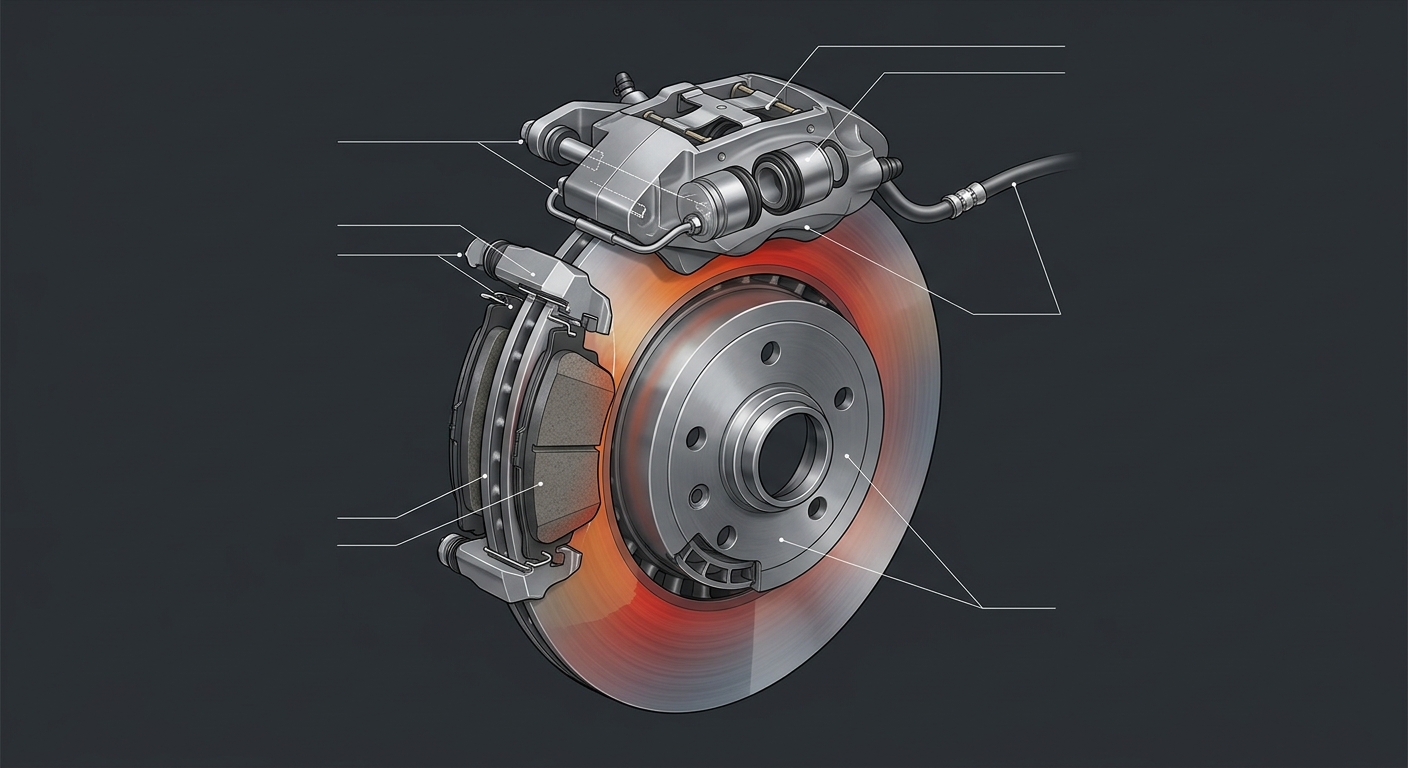
Braking systems rely on basic physics to bring thousands of pounds of moving metal to a complete stop. When you press down on the brake pedal, hydraulic fluid amplifies that force, pushing the brake pads against the spinning brake rotors. This action creates immense friction, which converts kinetic energy into thermal energy. Because this process relies entirely on friction and heat dissipation, the physical components of your braking system naturally wear down over time.
The brake rotor, which is the metal disc visible behind your vehicle’s wheel spokes, bears the brunt of this thermal load. Every time you slow down, a tiny amount of metal wears away from the rotor’s surface. If you drive a heavier vehicle like the 2026 Nissan Pathfinder, which has a curb weight of 4,489 lbs in its standard configuration, your rotors must absorb and dissipate significantly more heat than those on a lighter sedan. When rotors wear down too much, they lose their structural integrity and their ability to manage heat, which directly compromises your safety on the road.
Maintaining this system requires proactive attention to wear patterns and regular professional inspections. If you notice changes in your pedal feel or stopping distance, it is time to schedule brake service to have a technician measure your components. Routine maintenance is about preventing major component failures before they happen. For example, keeping your wheels aligned by understanding tire alignment importance ensures that your tires wear evenly, which in turn prevents uneven stress on your suspension and braking components.
When you need professional diagnostics, you can easily schedule maintenance online with our factory-trained technicians. Our team uses precision instruments to measure your rotors and pads, ensuring they meet strict manufacturer safety limits. If you need to plan a visit, you can get turn-by-turn directions to our facility by viewing our Shelbyville showroom location, or you can speak directly with an advisor by giving us a quick call to discuss your vehicle’s performance.
Table of Contents
- How Thin Can a Brake Rotor Get Before It Becomes Unsafe
- Warning Signs and Wear Indicators That Demand Immediate Brake Repair
- Comparing Brake Component Materials and Maintenance Requirements
- Brake System Maintenance Schedules and Local Road Demands
- Common Questions About Brake Wear and Rotor Safety Limits
- Schedule Expert Brake Care and Service
How Thin Can a Brake Rotor Get Before It Becomes Unsafe
Every brake rotor is engineered with a discard thickness limit, which is the absolute minimum thickness at which the rotor can safely operate. This measurement is typically stamped directly onto the rotor hub or edge by the manufacturer. Once a rotor wears down to or below this specified limit, it is no longer safe to use and must be replaced immediately.
Operating a vehicle with thin rotors poses several severe safety hazards:
- Heat Dissipation Failure: Thinner metal cannot absorb or dissipate the extreme heat generated during braking. This leads to brake fade, where the pedal feels soft and the vehicle requires a much longer distance to come to a stop.
- Structural Cracking: Under heavy braking stress, an excessively thin rotor can develop structural fractures or crack completely, leading to catastrophic brake failure.
- Caliper Piston Overextension: As the rotor and pads wear thin, the caliper pistons must extend further to make contact. If they extend too far, they can bind or leak hydraulic fluid, leaving you without stopping power.
While a mainstream passenger car like the 2026 Nissan Altima SV—which features a starting MSRP of $27,580 and an estimated fuel economy of 26 city / 36 hwy—puts moderate wear on its braking system during daily driving, heavier vehicles require much thicker rotors from the factory to handle their mass. For instance, if you are driving a large family vehicle like the 2026 Nissan Armada, you can browse our new Nissan Armada inventory to see how its heavy-duty chassis and braking components are built to handle substantial towing and hauling loads.
Technicians use specialized micrometer calipers to measure rotor thickness at multiple points around the disc. This precise measurement is compared against the factory specifications for your exact model. If you are driving an electric vehicle, which utilizes regenerative braking to recapture energy, your mechanical rotors may experience different wear patterns. You can explore our new Nissan EV inventory to learn more about how electric drivetrains distribute braking forces between electric motors and traditional friction brakes. No matter what drivetrain you use, keeping your rotors above the minimum safety threshold is non-negotiable.
Pricing
Pricing by trim
| Feature | SR | SR AWD | SV | SV AWD |
|---|---|---|---|---|
| Base MSRP | $28,980 | $30,480 | $27,580 | $29,080 |
| Destination charge | $1,245 | $1,245 | $1,245 | $1,245 |
Warning Signs and Wear Indicators That Demand Immediate Brake Repair
Your vehicle will almost always provide clear physical and auditory warnings when the braking system is approaching its wear limits. Ignoring these symptoms can quickly turn a simple pad replacement into an expensive repair job that requires replacing warped rotors, damaged calipers, and hardware.
The most common warning signs of brake wear include:
- Squealing or Squeaking Noises: Most modern brake pads feature small metal wear indicators that emit a high-pitched squeal when the pad material is nearly gone. This is a built-in warning that your pads need replacement before they begin damaging the rotors.
- Grinding Metallic Sounds: If you hear a harsh grinding noise, your pad material has completely worn away. This means you have metal-on-metal contact, where the steel backing plate of the pad is grinding directly into the rotor, causing severe gouging and immediate ruin of the rotor surface.
- Steering Wheel Vibrations: Feeling a pulsation in your steering wheel or brake pedal when slowing down usually points to a rotor with thickness variation, often referred to as a warped rotor. This happens when uneven heat buildup distorts the flat surface of the disc.
- Soft or Spongy Brake Pedal: A pedal that sinks easily to the floorboard indicates air in the hydraulic lines, a failing master cylinder, or a system leak, all of which require immediate professional attention.
When these symptoms appear, continuing to drive puts your safety at risk. To restore your vehicle’s original stopping performance, our service center uses factory-specified parts designed for your exact model. If you prefer to handle your own maintenance or need to replace worn components, you can order genuine Nissan parts directly from our department. Using original equipment manufacturer parts ensures proper fitment and heat management. You can also consult with our specialists by reaching out to our parts department staff to find the exact rotor measurements and pad compounds required for your vehicle.
Fuel Economy
Fuel economy and range by trim
| Feature | SR | SR AWD | SV | SV AWD |
|---|---|---|---|---|
| MPG | 26 city / 36 hwy / 30 combined | 25 city / 33 hwy / 28 combined | 26 city / 36 hwy / 30 combined | 25 city / 33 hwy / 28 combined |
Comparing Brake Component Materials and Maintenance Requirements
Choosing the right replacement components is essential for maintaining both the safety and the longevity of your braking system. Brake pads are generally classified into three primary material categories, each offering distinct performance characteristics, lifespans, and price points.
- Organic Brake Pads: Made from a mix of fibers, rubber, and resins, these pads are quiet and offer a soft pedal feel. However, they wear out the fastest and are not suited for heavy loads or high-heat environments.
- Semi-Metallic Brake Pads: Composed of steel, iron, and copper, these pads are highly durable and offer excellent heat transfer. They are ideal for heavy-duty applications and towing, but they produce more brake dust and can be noisier than other options.
- Ceramic Brake Pads: Constructed from dense ceramic fibers and copper fibers, these pads provide quiet operation, extremely low dust production, and excellent stopping power across a wide temperature range. While they generally carry a higher upfront cost, their longevity and gentle wear characteristics on your rotors make them a highly popular choice for daily drivers.
If you are commuting on the rolling hills around Christiana, your vehicle’s brakes will experience frequent deceleration cycles that generate significant heat. Drivers in this area often prefer ceramic pads for their consistent performance and quiet operation during daily trips. If you are looking for a highly capable vehicle to tackle local terrain, you can explore our new Nissan cars or check out our new Nissan Frontier inventory to find a model equipped with heavy-duty braking components designed for both highway commutes and rural work tasks. Matching your brake pad material to your typical driving conditions is the best way to maximize rotor life and maintain reliable stopping power.
Brake System Maintenance Schedules and Local Road Demands
Brake wear is highly dependent on your driving habits, vehicle weight, and the local geography where you spend most of your time behind the wheel. While manufacturers provide general maintenance intervals, real-world driving conditions dictate how often your system actually needs service.
For example, a driver navigating the rural routes and hilly terrain around Royal will apply their brakes differently than someone driving on flat, open interstate stretches. Constant elevation changes and slowing down for winding country lanes put a higher thermal load on your rotors, accelerating the wear process. For active families in these rural communities who rely on versatile transportation, we offer a wide selection of crossovers and SUVs. You can browse our new Nissan SUVs, including the highly efficient 2026 Nissan Rogue which features an impressive 29 city / 36 hwy fuel economy rating, to find a vehicle that balances daily utility with dependable, modern safety systems.
To keep your braking system in peak condition, we recommend the following maintenance schedule:
- Every 5,000 to 7,500 Miles: Have your brake pads and fluid levels inspected during every routine tire rotation or oil change.
- Every 15,000 to 20,000 Miles: Perform a comprehensive brake inspection, including measuring rotor thickness with a micrometer to check for uneven wear or warping.
- Every 30,000 to 45,000 Miles: Replace brake pads (this interval varies widely based on driving style and pad material).
- Every 2 Years or 20,000 Miles: Flush and replace the brake fluid to prevent moisture contamination and maintain firm pedal pressure.
If you are looking for an agile, compact option for your daily commute, you can shop our new Nissan Kicks inventory to experience a vehicle designed with responsive handling and efficient, low-maintenance braking systems.
Common Questions About Brake Wear and Rotor Safety Limits
Before scheduling a visit to our service center, many drivers want to understand the details of brake wear, pricing structures, and component options. Here are some of the questions our service advisors answer most frequently.
Q: How thin can a brake rotor get before it’s unsafe?
Each brake rotor has a unique minimum thickness specification stamped directly onto its hub by the manufacturer. Once a rotor wears down to this metric, it loses its structural integrity and ability to dissipate heat safely. Our technicians use precise micrometer calipers during every inspection to ensure your rotors remain safely above this discard limit.
Q: Does a typical brake service estimate include both parts and labor?
Yes, a professional estimate from our service department will clearly break down the costs for both the physical replacement parts—such as pads, rotors, and hardware—and the certified labor time required to install them. We provide transparent estimates upfront so you know exactly what to expect before any work begins on your vehicle.
Q: Are ceramic brake pads worth the extra cost compared to semi-metallic pads?
For most daily drivers, ceramic pads are highly recommended because they operate much quieter, produce minimal brake dust, and cause less wear on your rotors over time. While semi-metallic pads are excellent for heavy-duty towing and high-heat applications, ceramic pads offer a smoother, cleaner, and longer-lasting solution for everyday commuting.
Q: What causes a steering wheel to vibrate specifically when applying the brakes?
This vibration is almost always caused by a rotor that has developed thickness variation, which is commonly referred to as a warped rotor. When brake pads press against an uneven, heat-distorted rotor surface, the pulsation travels up through the steering column. Replacing or resurfacing the affected rotors will restore a smooth pedal feel.
Q: How can I find out if there are any active safety campaigns or recalls on my vehicle’s braking system?
You can easily check the status of your vehicle by using our online portal to check for vehicle recalls at any time. Simply enter your Vehicle Identification Number (VIN) to see if there are any open manufacturer campaigns that need to be addressed by our factory-trained technicians.
Engine & Performance
Powertrain specs by trim
| Feature | SR | SR AWD | SV | SV AWD |
|---|---|---|---|---|
| Engine | 2.5L | 2.5L | 2.5L | 2.5L |
| Horsepower | 188 hp | 182 hp | 188 hp | 182 hp |
| Torque | 180 lb-ft | 178 lb-ft | 180 lb-ft | 178 lb-ft |
| Transmission | Xtronic CVT | Xtronic CVT | Xtronic CVT | Xtronic CVT |
| Drivetrain | Front-wheel drive | All-wheel drive | Front-wheel drive | All-wheel drive |
Schedule Expert Brake Care and Service
Your braking system is the single most important safety feature on your vehicle, and keeping it properly maintained is essential for protecting you and your passengers. From simple brake pad replacements to precise rotor measurements and system flushes, our factory-trained technicians have the expertise and specialized tools to keep your vehicle stopping safely. We use genuine OEM parts to ensure that your vehicle performs exactly as the manufacturer intended, providing you with maximum reliability and peace of mind on every journey.
If you have noticed squealing noises, vibrations, or a soft brake pedal, do not delay your maintenance. You can view our rotating service discounts and view current service specials online to find great savings on the maintenance your vehicle needs. When you are ready to book your visit, you can use our convenient online scheduler to schedule your service today and select a time that fits perfectly into your busy calendar.
For drivers who are looking to upgrade to a brand-new model with the latest advanced driver-assist and safety technologies, our sales team is here to help. You can explore our convenient shopping tools to buy your car online and customize your entire purchase from the comfort of your home. If you want to speak with a member of our team or plan an in-person visit, feel free to give us a quick call or stop by our dealership located at 2801 US, Shelbyville, TN 37160.
0 comment(s) so far on Understanding the Mechanics of Your Stopping Power and Brake Rotor Wear