

Do Local Mechanics Have the Tools to Service R-1234yf Refrigerant?
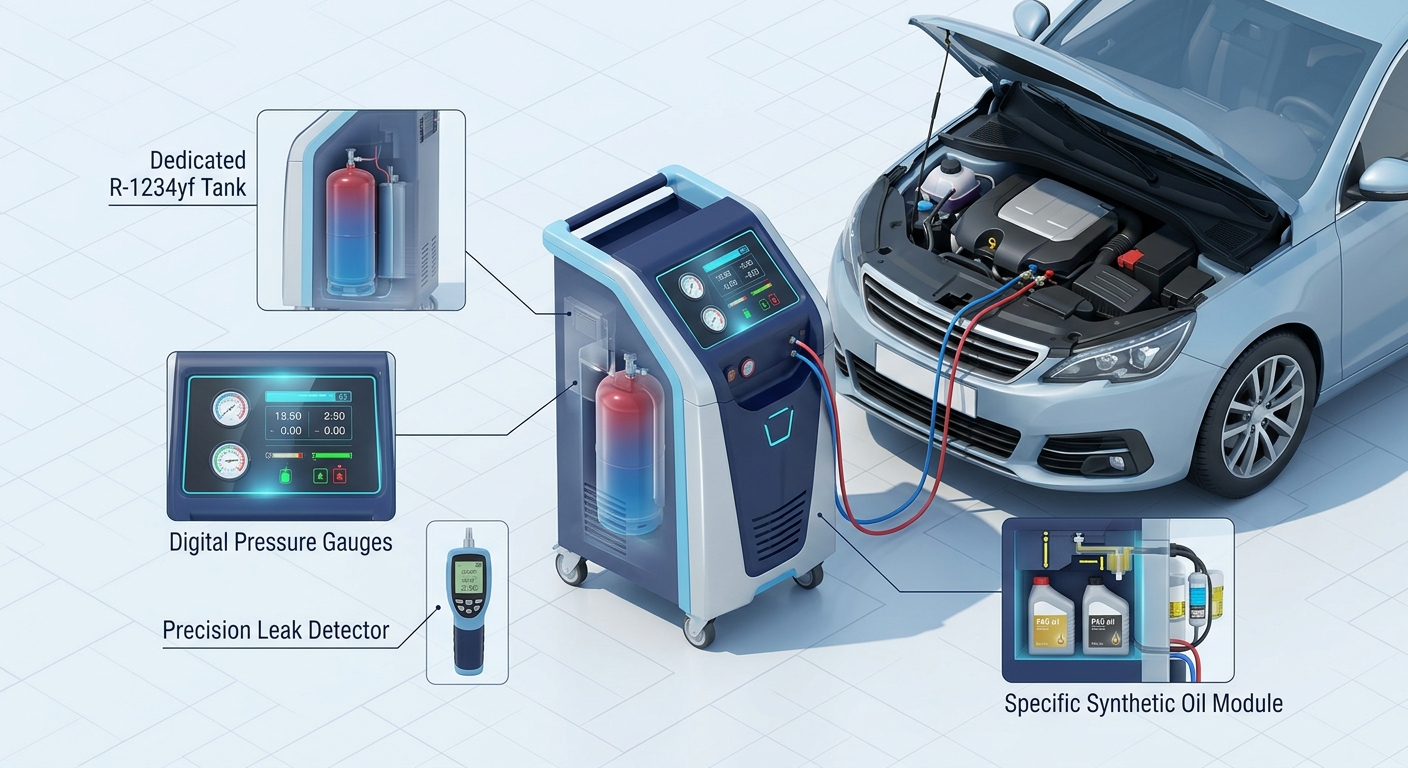
Local repair facilities in Shelbyville vary significantly in their equipment capabilities, as many independent repair shops lack the specialized recovery, recycling, and recharging stations required for R-1234yf refrigerant. Modern Nissan vehicles utilize this environmentally friendly refrigerant, which demands dedicated service equipment, specific synthetic lubricants, and EPA-compliant leak detection systems distinct from older systems. Certified Nissan service facilities possess factory-mandated equipment specifically engineered to maintain and recharge these advanced climate control systems safely.
Environmental standards led automakers to transition away from older R-134a systems in favor of R-1234yf refrigerant, which features a significantly lower global warming potential. Servicing these modern automotive air conditioning systems requires dedicated machinery costing thousands of dollars to prevent cross-contamination between fluid types. Independent garages often hesitate to make this investment or charge elevated rates to offset equipment overhead. Servicing an R-1234yf system with incompatible hoses, incorrect oil formulations, or recycled R-134a can damage the internal seals and severely compromise compressor performance.
When driving during humid Middle Tennessee summers, an inefficient air conditioner rapidly makes cabin conditions uncomfortable. Commuters driving into town from Christiana depend on immediate, reliable cabin cooling during high-heat afternoons on regional highways. Attempting to service modern climate systems without factory-calibrated pressure gauges or pure refrigerant stocks risks long-term mechanical failure.
Ensuring your climate control system functions properly requires certified diagnostic equipment operated by factory-trained technicians. Drivers can verify their system status by visiting our Shelbyville service facility or giving our service team a quick call at (931) 536-3118 to discuss cooling performance issues.
Table of Contents
- How Does Nissan Intelligent Climate Control Keep Your Cabin Cool in Tennessee Heat?
- Which 12V Battery Does Your 2026 Nissan Use to Survive Summer Highs?
- What Essential Maintenance Prevents Summer Heat Damage on Tennessee Roads?
- Common Questions About Nissan Summer Maintenance
- Keep Your Nissan Cool and Ready for Tennessee Driving
How Does Nissan Intelligent Climate Control Keep Your Cabin Cool in Tennessee Heat?
The Nissan Intelligent Climate Control system integrates directly with remote engine start technology to monitor ambient cabin temperatures and automatically activate air conditioning, cabin recirculation, and fan intensity before you enter the vehicle. During intense Southern heat, the system pre-cools the cabin to a comfortable baseline during its default 10-minute run cycle while keeping vehicle doors locked.
When remote start initiates, the climate module evaluates internal and external thermal sensors to determine the quickest cooling strategy. The system automatically turns on maximum A/C and opens recirculated air vents to cool hot cabin air rapidly. On equipped models, climate-controlled ventilated seating automatically engages to cool seating surfaces before occupants take their seats. Because remote start runs the internal combustion engine rather than operating solely on battery power, the high-output alternator actively maintains battery charge levels throughout the pre-cooling cycle.
Vehicle owners can activate this pre-cooling routine using their key fob or through the smartphone-based NissanConnect Services application. This capability proves especially convenient when preparing a midsize or full-size SUV for family trips. Drivers interested in full-size utility might consider researching the new Nissan Armada, while others can explore versatility by browsing our new Nissan SUV lineup to compare cabin comfort features across model lines.
Maintaining advanced cabin comfort systems over the lifespan of a vehicle requires routine inspection of compressor belts, blower motors, and electrical relays. When unexpected repairs arise, owners can keep their vehicles performing at peak levels by applying for service financing to manage unexpected maintenance needs conveniently.
Engine & Performance
Powertrain specs by trim
| Feature | Dark Armor | Dark Armor AWD | Platinum AWD | Rock Creek AWD | S AWD | S FWD | SL AWD | SL FWD | SV AWD | SV FWD |
|---|---|---|---|---|---|---|---|---|---|---|
| Engine | 1.5L | 1.5L | 1.5L | 1.5L | 1.5L | 1.5L | 1.5L | 1.5L | 1.5L | 1.5L |
| Horsepower | 201 hp | 201 hp | 201 hp | 201 hp | 201 hp | 201 hp | 201 hp | 201 hp | 201 hp | 201 hp |
| Torque | 225 lb-ft | 225 lb-ft | 225 lb-ft | 225 lb-ft | 225 lb-ft | 225 lb-ft | 225 lb-ft | 225 lb-ft | 225 lb-ft | 225 lb-ft |
| Transmission | Xtronic | Xtronic | Xtronic | Xtronic | Xtronic | Xtronic | Xtronic | Xtronic | Xtronic | Xtronic |
| Drivetrain | Front-wheel drive | All-wheel drive | All-wheel drive | All-wheel drive | All-wheel drive | Front-wheel drive | All-wheel drive | Front-wheel drive | All-wheel drive | Front-wheel drive |
Which 12V Battery Does Your 2026 Nissan Use to Survive Summer Highs?
Most modern Nissan models utilize an Absorbent Glass Mat (AGM) or Enhanced Flooded Battery (EFB) designed to handle heavy electrical loads and elevated engine bay temperatures. High ambient heat accelerates internal plate grid corrosion and electrolyte degradation faster than sub-zero winter temperatures, making summer battery health checks vital for starting reliability.
Unlike conventional flooded lead-acid batteries, an Absorbent Glass Mat (AGM) battery utilizes micro-fiberglass separators to hold electrolyte fluid in suspension. This design provides superior vibration resistance, faster recharge acceptance, and increased thermal durability under high heat. Nissan vehicles equipped with automatic stop-start tech or power-intensive driver-assist packages rely heavily on these durable battery constructions to maintain consistent system voltage. A typical midsize crossover requires a battery rated between 550 and 700 Cold Cranking Amps to support both starter draw and summer accessory demands.
Heat damage often manifests without warning, leaving drivers with a sudden click when pressing the ignition button. For residents navigating the hilly terrain and rural back roads near Royal, an undetected battery failure can result in unexpected downtime far from local repair options. Periodic voltage tests and terminal inspections help prevent sudden failure during severe heat waves.
Factory replacement batteries engineered for Nissan vehicles carry generous coverage terms to protect vehicle owners. Genuine replacement units include an 84-month limited warranty featuring 100% replacement coverage during the initial 24 to 36 months. Truck owners looking at heavy-duty utility can start by researching the new Nissan Frontier, while shoppers seeking pre-owned options can view our pre-owned vehicle specials. When a replacement battery is needed, vehicle owners can rely on ordering genuine Nissan parts to match original factory specifications.
Fuel Economy
Fuel economy and range by trim
| Feature | Dark Armor | Dark Armor AWD | Platinum AWD | Rock Creek AWD | S AWD | S FWD | SL AWD | SL FWD | SV AWD | SV FWD |
|---|---|---|---|---|---|---|---|---|---|---|
| MPG | 29 city / 36 hwy / 32 combined | 28 city / 35 hwy / 31 combined | 28 city / 35 hwy / 31 combined | 27 city / 32 hwy / 29 combined | 28 city / 35 hwy / 31 combined | 29 city / 36 hwy / 32 combined | 28 city / 35 hwy / 31 combined | 29 city / 36 hwy / 32 combined | 28 city / 35 hwy / 31 combined | 29 city / 36 hwy / 32 combined |
What Essential Maintenance Prevents Summer Heat Damage on Tennessee Roads?
Preventing heat-induced mechanical failure requires routine monitoring of engine coolant reservoirs, tire inflation pressures, and cabin air filtration components throughout the warm season. Sustained hot weather places immense stress on engine cooling loops, elevates tire internal pressures, and forces HVAC components to run continuously at peak capacity.
Coolant levels must be checked when the engine is completely cold, ensuring fluid rests firmly between the MIN and MAX indicators on the translucent expansion tank. Drivers should never loosen a cooling system cap on a warm engine due to extreme pressure buildup. In addition to fluid checks, tire pressure monitoring requires attention. Atmospheric heat increases tire pressure, but driving on underinflated tires in hot weather creates dangerous internal sidewall heat. Drivers should adjust tire pressures strictly to the door-jamb placard cold specification rather than the tire sidewall maximum rating.
A complete summer maintenance checklist includes several key inspection points:
- Inspecting coolant reservoir levels and checking radiator hoses for soft spots or hardening.
- Testing starter draw, alternator charging output, and battery terminal tightness.
- Checking cabin air filters for dust or debris restrictions that reduce A/C airflow.
- Inspecting brake friction materials, rotor surfaces, and suspension bushings for heat stress.
- Verifying spare tire inflation pressure, jack functionality, and exterior lighting output.
Keeping up with routine service preserves vehicle value and long-term driving safety. Efficient crossovers like the 2026 Nissan Rogue offer accessible entry points, with the S FWD trim featuring an MSRP of $29,490 with a $1,545 destination charge. Higher trims like the Platinum AWD carry an MSRP of $39,390, offering premium seating materials that benefit greatly from shade application and cabin air maintenance. Vehicle owners seeking long-term coverage peace of mind can explore the Newton Certified program to review comprehensive warranty protections.
Pricing
Pricing by trim
| Feature | Dark Armor | Dark Armor AWD | Platinum AWD | Rock Creek AWD | S AWD | S FWD | SL AWD | SL FWD | SV AWD | SV FWD |
|---|---|---|---|---|---|---|---|---|---|---|
| Base MSRP | $33,340 | $34,740 | $39,390 | $34,390 | $30,890 | $29,490 | $36,990 | $35,590 | $31,890 | $30,490 |
| Destination charge | $1,545 | $1,545 | $1,545 | $1,545 | $1,545 | $1,545 | $1,495 | $1,495 | $1,545 | $1,545 |
Common Questions About Nissan Summer Maintenance
Q: How does ambient summer heat affect tire pressure ratings?
Ambient temperatures alter tire pressure by roughly 1 psi for every 10-degree Fahrenheit change in temperature. High asphalt temperatures cause air inside the tire to expand during long highway trips. However, checking pressure when tires are cold gives the accurate baseline necessary to prevent underinflation, which causes excessive sidewall flexing and hazardous heat buildup.
Q: Why does my vehicle air conditioner blow warmer air while idling?
Blowing warm air at idle typically indicates reduced airflow through the front A/C condenser or an underperforming electric cooling fan. It can also stem from low R-1234yf refrigerant levels, which reduce overall system operating pressures when engine RPM drops. Professional pressure testing identifies whether the issue involves refrigerant charge volume, condenser blockages, or mechanical compressor wear.
Q: Can an older refrigerant like R-134a be used in an R-1234yf system?
No, mixing different refrigerant types damages internal climate control components and violates federal environmental regulations. Systems designed for R-1234yf refrigerant feature specialized compressor lubricants and unique service port fittings to prevent cross-contamination. Introducing non-approved refrigerants causes severe oil sludging, seal degradation, and compressor failure.
Q: What documentation should I bring to a service appointment?
Drivers visiting for routine maintenance or warranty inspection should bring their vehicle registration, active auto insurance cards, and any recent service records. Providing these documents allows service advisors to quickly verify existing factory coverage, track historic maintenance schedules, and process warranty claims efficiently.
Q: How frequently should cabin air filters be changed in humid climates?
Cabin air filters should be inspected every 12,000 to 15,000 miles, or more frequently if driving on unpaved surfaces. In humid Southern environments, organic debris trapped in a restricted filter fosters odor-causing buildup and restricts airflow across the evaporator core, making the air conditioning system work harder to cool the vehicle.
If you are considering upgrading your current vehicle before taking a summer trip, start by appraising your vehicle trade-in online to estimate your present vehicle value.
Keep Your Nissan Cool and Ready for Tennessee Driving
Scheduling a comprehensive summer service inspection ensures your climate control, 12V battery, and cooling systems remain fully protected against severe thermal stress. Addressing minor maintenance items before hot weather peaks prevents roadside inconvenience, preserves fuel efficiency, and protects critical mechanical components from heat-induced wear.
Our factory-certified service center features the specialized tools, factory diagnostic software, and genuine OEM parts needed to keep your vehicle operating at factory specifications. Whether your vehicle requires an R-1234yf refrigerant pressure check, a cooling system flush, or a complete battery health check, our service team is prepared to assist.
Take proactive steps to protect your vehicle performance this season. Drivers can locate our service facility at 2801 US in Shelbyville, connect with our service desk directly by calling (931) 536-3118, or reserve an appointment by scheduling a battery test online today.
0 comment(s) so far on Do Local Mechanics Have the Tools to Service R-1234yf Refrigerant?